
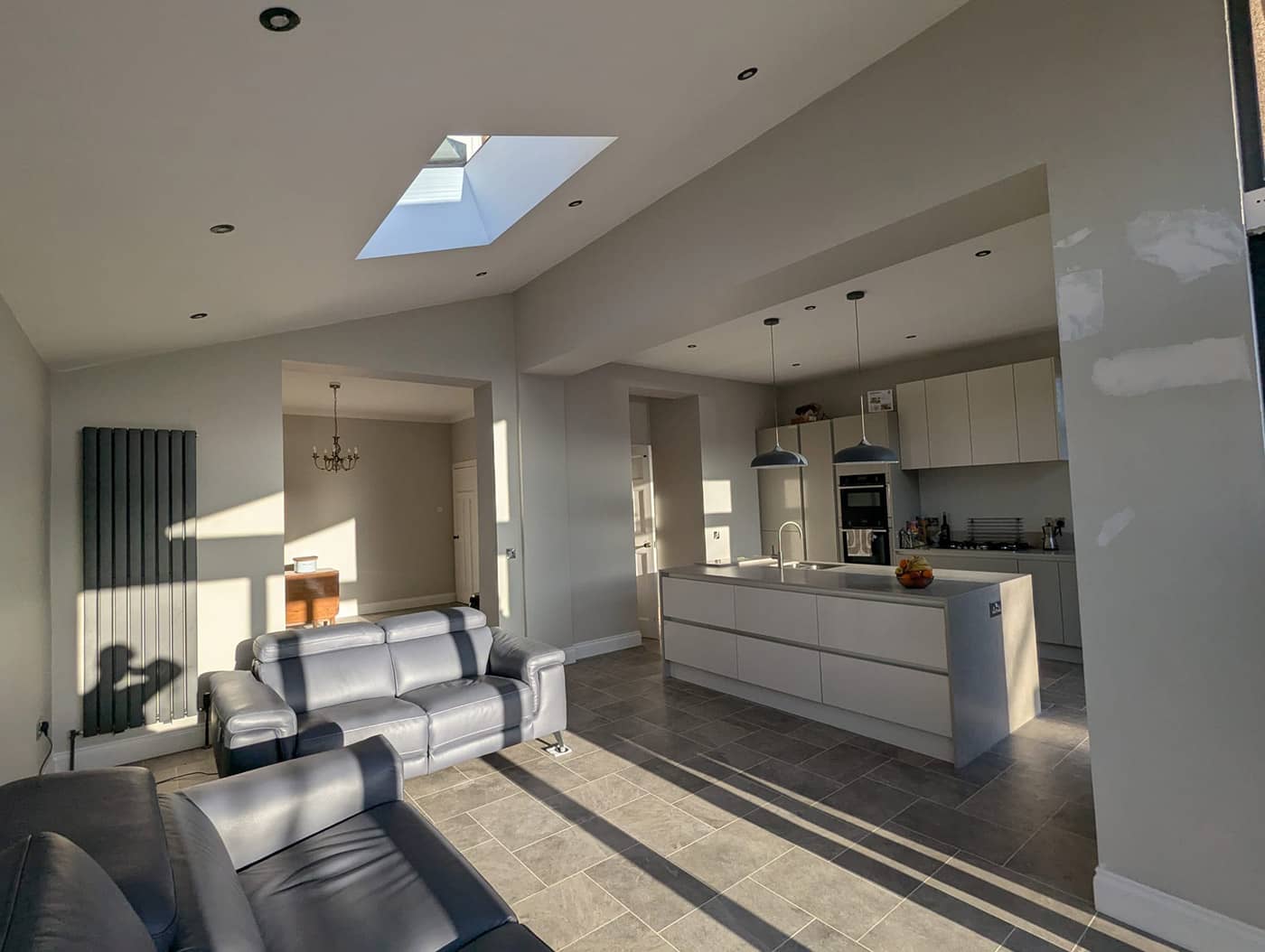
Do I need a structural engineer? A plain-English guide
When you need a structural engineer, how Building Warrants work in Scotland, and what to expect when you get in touch. No jargon, and no obligation.
When do you need a structural engineer?
A structural engineer works out how a building carries its weight, and designs anything new so it does that safely. Whenever you change the structure of your home, or something suggests the structure has a problem, that's our job.
You're likely to need a structural engineer if you're:
- Removing or altering a load-bearing wall, including knocking through between rooms
- Removing a chimney breast
- Building an extension, garden room or new house
- Converting a loft, or adding a dormer
- Forming a new or wider opening in an external wall, for example for bi-fold doors
- Changing a roof, or adding heavy loads such as a new bathroom, water tank or solar panels to an older roof
- Cracks that are new, growing, wide or diagonal, or doors and windows that have started sticking
- A Home Report or mortgage valuation that recommends a structural engineer's report
- Altering an older, listed or tenement building
If you're not sure, ask. A short phone call is often enough to tell you whether you need us at all.
Weight from the roof, the walls and the floor above runs down through the wall and into the foundations below. Take the wall away and that load needs a new route to the ground.
A simplified illustration. Every wall is different, which is why we look at yours before designing anything.
How Building Warrants work
In Scotland, most structural work needs a Building Warrant from your council before it starts. Here's how the process usually runs, and where we fit in.
- Check whether you need one
mygov.scot lists building a new home, extending your home, building or removing load-bearing walls, changing roofs, external walls or other structural elements, converting a loft or garage, and demolishing a building. If you're not sure, ask your council's building standards service before you start.
- Get the drawings and calculations prepared
Usually an architect or designer prepares the overall drawings, and a structural engineer provides the structural design: calculations showing the structure is safe, and drawings of beams, foundations and other structural elements. For a straightforward wall removal, the engineer's drawings and calculations may be most of what's needed.
- Apply online
Applications go through the Scottish Government's eDevelopment.scot portal. There's a fee, based on the value of the work, and the portal has a fee calculator.
- The council checks it
The council's building standards team (the verifier) checks the proposals against the building standards, and may come back with questions. On the structural side, we answer those for you.
- Warrant granted, then build
You'll receive the warrant, the approved plans and a Construction Compliance and Notification Plan that says when to tell the council about stages of the work. A warrant is valid for three years from the date it's granted.
- Completion certificate
When the work is finished, a completion certificate is submitted to the council, who may inspect before accepting it. Keep it safe: solicitors usually ask for it when you sell.
It's an offence to start building work without a warrant when you need one. And without an accepted completion certificate, you may struggle to sell or remortgage.
Planning permission is about how a building looks, where it sits and what it's used for. Some projects need planning permission as well as a warrant. Listed buildings may also need listed building consent.
Some structural engineers can certify their own designs through the SER scheme. The council then doesn't re-check the structure, and the warrant fee is reduced.
To confirm with GCP AssociatesWhether GCP can certify structural designs through SER. If so, say so here: it's a real benefit to clients.- mygov.scot: Building warrant (opens in a new tab)
- eDevelopment.scot (apply online) (opens in a new tab)
- eBuilding Standards fee calculator (opens in a new tab)
- Scottish Government: making a quality building warrant application (opens in a new tab)
- Scottish Government: building standards customer journey (opens in a new tab)
- City of Edinburgh Council: building warrants (opens in a new tab)
- City of Edinburgh Council: completion certificates (opens in a new tab)
This guide is general information, checked against these sources in October 2026. Your council's building standards service has the final say on your project.
What happens when you get in touch
- A conversation
Tell us what you'd like to do, or what you've noticed. We'll tell you what's needed and give you a clear quote.
- A visit
Where needed, we inspect the property: what the wall is carrying, how the roof is built, what the cracks are telling us.
- The design or report
You get calculations and drawings for your warrant and your builder, or a written report in plain English.
- Support
We answer questions from the council and your builder as the job goes ahead.
How to prepare
- Your address and a short description of what you'd like to do
- Any drawings you already have, from an architect or from when the house was built or altered
- Photos: the wall, the loft, or the cracks (with a coin or ruler for scale)
- Your Home Report, if the issue was flagged there
- Your timescale, and your builder's details if you have one
- If you live in a flat or tenement, a note of who owns the flats above and below
Living in a tenement? Read Edinburgh tenements and the New Town.
Homeowner questions
Is a Building Warrant the same as planning permission?
No. Planning permission is about a building's siting, appearance and use, and its effect on neighbours and surroundings. A Building Warrant is about how it's built: structure, fire safety, energy and so on. Some projects need both, some need one, some need neither. Listed buildings may also need listed building consent.
Draft answer for GCP to approveCan I start work while I wait for the warrant?
No. If your work needs a Building Warrant, it's an offence to start before you have one, and you could be fined.
Draft answer for GCP to approveWhat is an SER certificate?
Some chartered structural engineers in Scotland are approved to certify that a structural design meets the building standards, through a scheme run by Structural Engineers Registration (SER). A certified design isn't re-checked by the council, and there's a discount on the warrant fee.
Draft answer for GCP to approveNot sure where to start?
Call us, or send a few details and photos. We'll tell you what you need, and what you don't.